
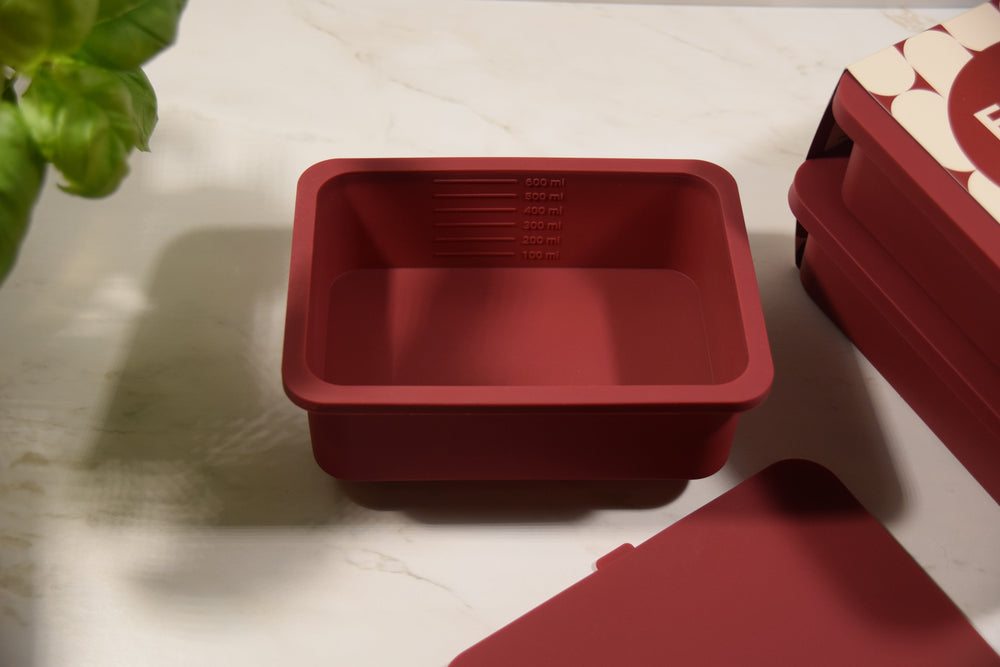
At first glance, silicone molds seem practical: lightweight, flexible, and easy to handle. In everyday use, however, a typical problem quickly emerges - many molds bend when filled or carried.
Flexibility alone is not a good solution. The crucial factor is whether a mold remains stable and controllable even with contents.
Why This Happens
The main reason usually lies not in the material itself, but in the construction. Very soft molds give way as soon as liquid or heavy contents are placed inside. What seems practical when empty quickly feels unstable with contents.
The FOPH treats tableware and kitchen utensils as materials in contact with food. This means it's not just about whether something is food-safe, but also whether it can be used effectively for its intended purpose.
Soft Alone vs. Stably Constructed
| Situation | Soft Standard Mold | FRiBA with Metal Frame |
|---|---|---|
| Filling | Gives way | Retains shape |
| Carrying | Unsafe | Controlled |
| Liquid foods | Wobbly | Secure |
| After lifting | Distorts | Dimensionally stable |
Why Stability Matters in Everyday Life
Especially for meal prep, small oven dishes, or frozen portions, stability is a real usage factor. A mold that wobbles or distorts when lifted makes every step more cumbersome - this is not a detail, but a difference in everyday usability.
- Bending is usually due to a lack of stability in the construction.
- With contents, it becomes clear whether a mold is truly suitable for everyday use.
- A metal frame stabilizes precisely at the most heavily stressed edge.
- Dimensionally stable means: safer carrying, cleaner filling, more relaxed working.
- FOPH - Materials and Objects in Contact with Food
- FOPH - Tableware and Kitchen Utensils
