
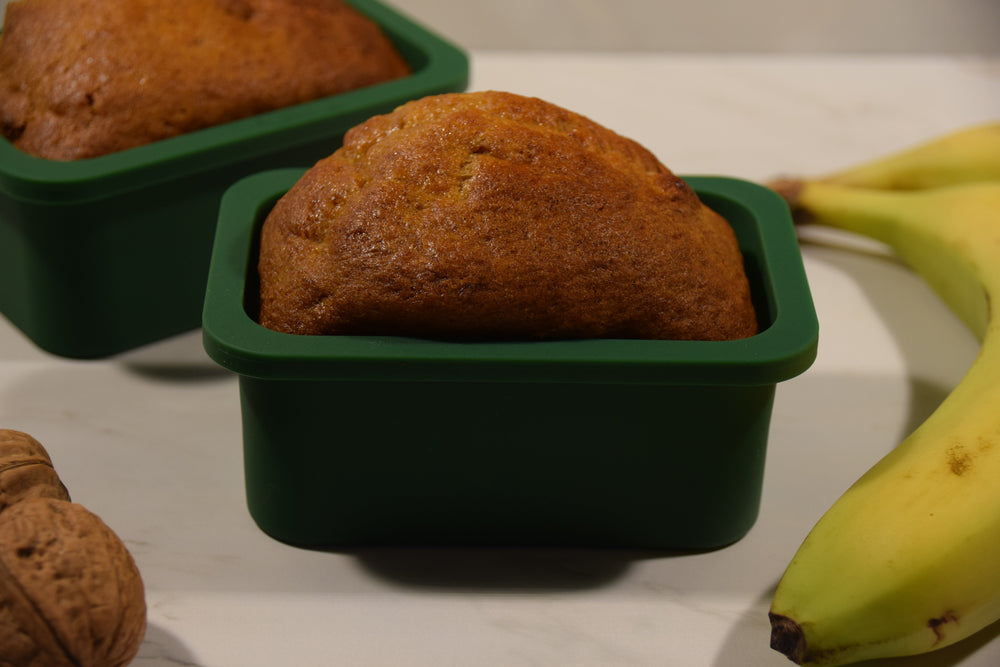
Silicone or metal – this question comes up again and again. The honest answer is: it depends on how you actually use the mold in everyday life.
Metal is strong for classic baking. Silicone offers advantages as soon as versatility counts – freezing, portioning, storing, reusing.
What the comparison often overlooks
Metal stands for stability and classic oven use, silicone for flexibility. In everyday life, this rough classification is not enough: the crucial factor is how comfortable and practical a mold is to use in various situations.
The FOPH generally treats dishes and kitchen utensils as materials that come into contact with food. It's not just the material itself that matters, but the safe and sensible use in its intended application.
Metal and silicone in use
| Use | Metal mold | Silicone mold (FRiBA) |
|---|---|---|
| Classic baking | Strong | Good, oven-safe up to 250 °C |
| Freezing | Hardly | Yes, down to −50 °C |
| Portioning | Rarely | ml scale |
| Versatility | Low | High |
| Stability | High | Metal frame |

Why FRiBA changes the comparison
FRiBA combines the everyday advantages of silicone with increased stability thanks to the metal frame. You don't have to choose between soft-and-wobbly or stable-and-inflexible. Lids and ml markings make the molds particularly strong for meal prep, casseroles, and pre-portioned meals.
- The better mold depends on the application, not generally on the material.
- Metal is strong for pure baking.
- Silicone excels in versatility and multiple steps.
- FRiBA combines both: silicone comfort plus metal frame stability.
- FOPH - Dishes and kitchen utensils
- FOPH - Materials and objects in contact with food
